
Major energy users are under significant financial pressure, driven by a combination of high material costs, supply chain disruption and increasingly tight margins. As a result, energy procurement and consumption have become critical areas to manage, moving from an operational concern to a strategic priority for many industrial businesses.
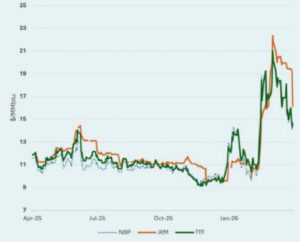
In 2026, the UK energy landscape remains fraught, with industrial electricity prices among the highest in Europe at around 75 per cent higher than pre-2022 levels. These prices are influenced by ongoing geopolitical instability, contributing to a volatile energy market. In the UK, this volatility is amplified by continued reliance on fossil fuels while renewable capacity continues to scale up.
For many organisations with high energy demand, the wholesale price of energy isn’t the only driver of rising costs. Increases in Non-Commodity Charges (NCC), such as the Transmission Network Use of System (TNUoS) charge, also play a role. From April 2026, these charges have risen sharply, with additional increases expected in the next few years according to the National Energy System Operator (NESO).
The broader context of the UK’s energy transition provides a further challenge. With the Government committed to reaching Net Zero by 2050 and many organisations working towards their own Science Based Targets initiative (SBTi)-aligned targets, tightening legislative and regulatory expectations — such as Energy Savings Opportunity Scheme (ESOS) and Streamlined Energy and Carbon Reporting (SECR) — require businesses to focus more heavily on compliance obligations and reporting progress.
Amidst these pressures, there is also positive movement. The UK Government has confirmed an expansion of the British Industrial Competitiveness Scheme (BICS), extending eligibility to more than 10,000 energy-intensive manufacturers. For qualifying organisations, this will provide electricity bill reductions of up to 25 per cent — which offers significant breathing room for businesses facing intense cost stressors.
In parallel, the rollout of Market-Wide Half-Hourly Settlement (MHHS) brings improved billing accuracy, better visibility of consumption data, and increased support for Time-of-Use (ToU) tariffs and smart technologies.
Energy efficiency for high-demand organisations
For businesses operating on tight margins, cost-management measures need to be achievable without disrupting production. One of the most effective ways to take action on energy use is through an energy audit, which can identify efficiency improvements that deliver meaningful gains with relatively low upfront investment.
Heavy industry, manufacturing and other energy-intensive operations typically see the greatest efficiency opportunities in a few key areas. Process heat and high-temperature systems are often the largest source of energy use on industrial sites. Audits frequently identify savings through waste-heat recovery, improved insulation on equipment and pipework, and better optimisation of heat-intensive processes such as start-up and shut-down. Even small improvements can deliver meaningful cost reductions.
Motors, drives and electrically driven processes also present significant opportunities. Many sites operate extensive networks of motors, pumps and fans that run continuously, sometimes at full load regardless of demand. Improvements can include installing variable-speed drives, reviewing duty cycles and production schedules, improving maintenance routines, or replacing ageing equipment.
Finally, demand management and peak load control can play an important role. Adjusting operating schedules or sequencing processes to smooth demand peaks can help reduce exposure to peak network and Non-Commodity Charges, which are an increasingly significant component of industrial energy costs.
The importance of choosing the right energy contract
Reducing consumption is only one part of the picture — the other important factor is procurement approach. Energy purchasing should be aligned with operational priorities, budget restrictions, and the organisation’s approach to risk, ensuring the product is right for your requirements.
The choice of fixed vs. flexible is a strategic decision that can shape cost stability for years ahead, so it’s worth understanding exactly what costs are included, what might vary, and whether the risks are aligned with your organisation’s approach.
For major energy users, 2026 continues to be shaped by a challenging mix of high and volatile prices, rising Non-Commodity Charges and increasing regulatory pressures. In this environment, effective energy management is a strategic priority that can support operational resilience. Practical actions such as improving efficiency through energy audits, combined with an informed approach to energy procurement, can help organisations feel more in control.