- About
- MEUC Community
- Events
- Supporters
-
Resources
Buying & Using Utilities Our flagship magazine Weekly Newsletter Market and policy briefing Monthly Snapshots Concise sector summaries Quarterly Briefing In-depth analysis Podcasts Event recordings and session podcasts Search Resources Search the full resource library Subscribe Join the mailing list
Summer 2026

In this issue
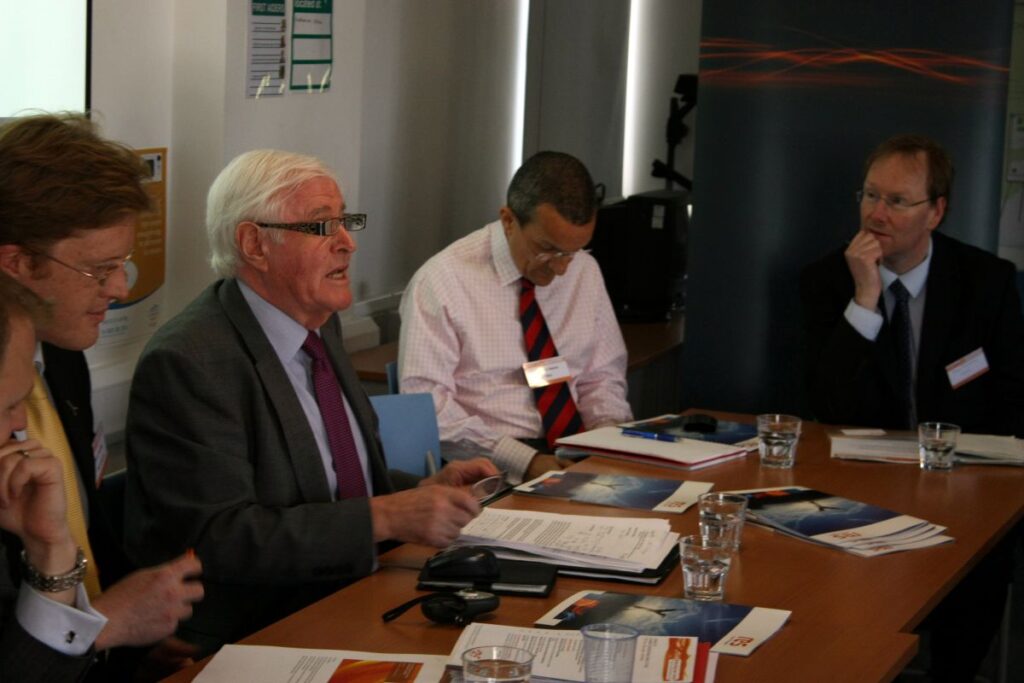
Remembering Andrew Bainbridge, Founder of MEUC
Robin Hale pays tribute to Andrew Bainbridge, the founder of MEUC, whose vision for an independent voice for major energy users shaped the organisation from its earliest days in 1987.
Choosing the right route to market
As the UK accelerates its transition to a low-carbon electricity system, understanding the difference between Fixed-Price and Day-Ahead Indexed PPAs has become essential for renewable generators seeking to optimise revenues.
Scaling flexibility and costs
Virtual Trading Parties have quickly transformed the UK flexibility market since their introduction in late 2024 — but their rapid growth is also generating new system costs that all consumers ultimately share.

Managing the unhedgeable: Building cost resilience
Network charges, renewable levies, carbon taxes and balancing costs now account for 60–70 per cent of the total delivered energy bill across Europe. Dr Camille Louhichi explains why the era of the "set and forget" hedge is over.

The energy landscape: Insights for 2026
UK industrial electricity prices remain around 75 per cent above pre-2022 levels, while Non-Commodity Charges are rising sharply. Mark Doyle examines how major users can respond through efficiency, procurement and risk management.
A patchwork search for energy security
From National Security and Investment Act reforms to record CfD auction results, fusion strategy and the UK Steel Strategy, Geoff Davies surveys a Parliamentary landscape shaped by competing visions of energy security.
Don't ignore flexibility
With Non-Commodity Charges projected to rise 84 per cent by 2030, flexibility is now one of the most practical levers available to businesses — and most already have the assets they need to participate.
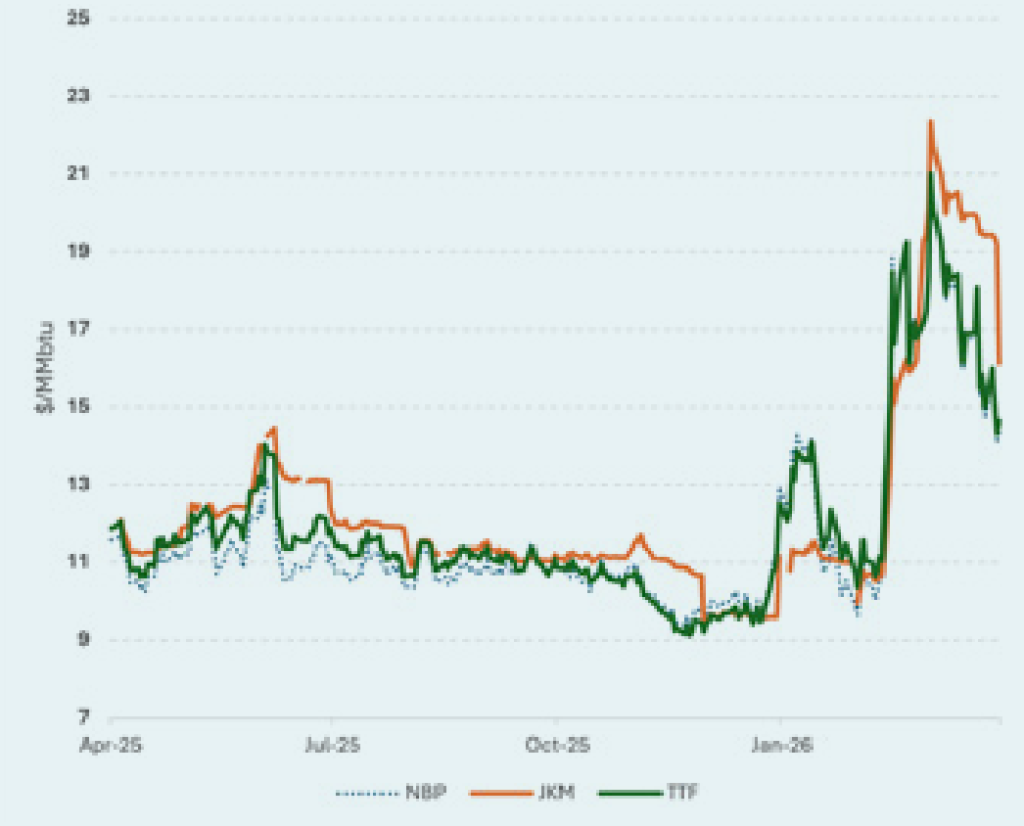
The end of predictable energy prices
The Strait of Hormuz disruption has triggered the largest supply shock in oil market history. Michael Doherty explains why old fixed-price, floating, and hybrid procurement strategies are no longer fit for purpose.
Rethinking network capacity
Many organisations are paying for network capacity set years ago that no longer matches their actual demand. A desktop review of one industrial site revealed £232,000 in potential annual savings — without touching a single piece of plant.
Why the UK is leading in sub metering solutions
From real-time IoT data to ESG compliance support, sub metering is transforming how businesses understand and cut energy costs. Colin Kristiansen explains why 2026 is the year major energy users must act.
Managing system costs
As the UK's clean power transition reshapes the energy system, Gary Stalker sets out practical actions major users can take now to reduce Non-Commodity Costs — from Time-of-Use optimisation to BICS qualification.

Market, costs and clarity: Key takeaways from BUU Live
More than 180 delegates made it to the IET London despite a tube strike, with system costs, MHHS data quality, water resilience and renewable procurement all taking centre stage at MEUC's Spring 2026 Conference.
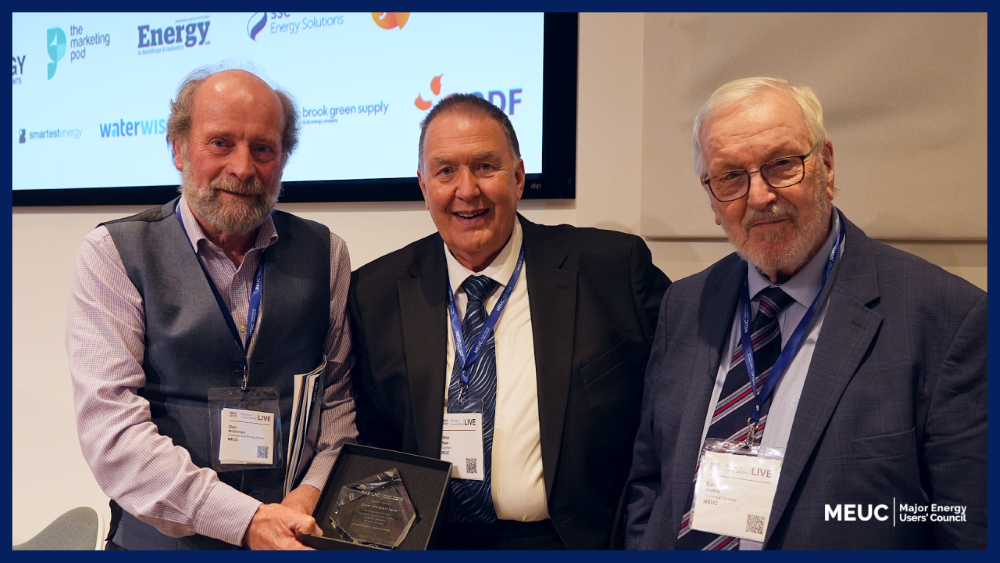
Reflections of the MEUC
After 35 years of involvement as member, chair and energy adviser, Don McGarrigle marks his third and final retirement from MEUC with a personal account of the organisation's remarkable journey through UK energy market history.
An evolving landscape
The GHG Protocol, SBTi and B Corp have all introduced significant reforms in the past six months. Hannah Crowley and Daniel Farris outline what these changes mean for organisations trying to keep decarbonisation strategies on track.
How digital water monitoring cuts risk, cost and carbon
Around 3.2 million organisations in England and Wales carry out manual Legionella risk management each month. Colin Payne explains how sensor technology could slash water waste, cut labour costs and transform compliance.

Here we go again…
NESO is forecasting £46 billion in allowed transmission revenue for the current price control period — more than double the previous five years. Arthur Probert also looks at why new consultant regulation misses the "lead generator" problem entirely.

Would you drink to that?
The UK Government's Water White Paper and Welsh Government's Water Green Paper have both flagged non-potable water use as a policy priority. Karma Loveday sets out what would need to change for businesses to adopt it at scale.
Why metering data will define winners and losers
Market-Wide Half-Hourly Settlement is a fundamental reset of the energy market that will redistribute tens of millions of pounds based purely on data quality performance. Joel Stark explains what large users must do now.
Fuel cells cut costs and carbon
Despite higher upfront capital costs, solid-oxide fuel cells deliver 30 per cent gas savings, 99.999 per cent availability guarantees, and a clear pathway to full decarbonisation — making them increasingly compelling for behind-the-meter generation.
The power of connections
In an era of dashboards and instant answers, Claire Slade reflects on why the conversations that happen around the edges of MEUC events often carry more lasting value than anything that can be measured.
The cost dilemma at the heart of going green
UK electricity prices are 75 per cent above pre-2022 levels, and the push for clean power is raising system costs further. Eddie Proffitt asks whether the focus on decarbonising the grid is coming at the expense of decarbonising heating and transport.