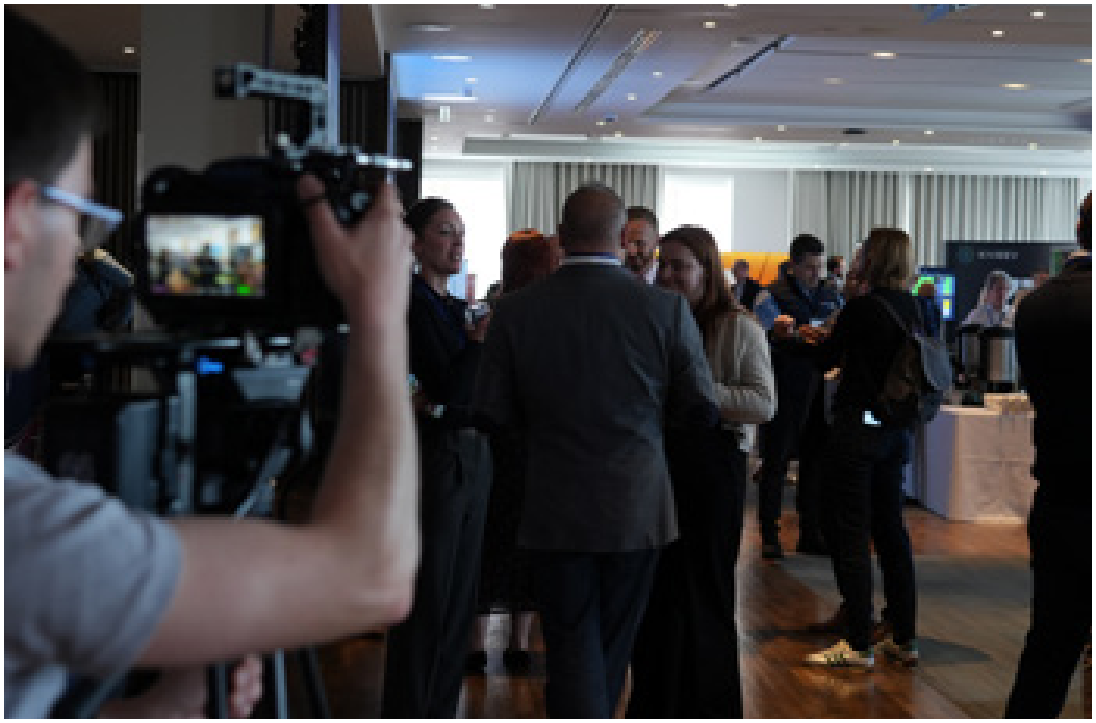
There was always going to be plenty to talk about at our Spring 2026 Conference and Exhibition. What we had not quite planned for was a tube strike adding one more layer of disruption to the day. Even so, more than 180 delegates, speakers, exhibitors and supporters made it to the IET in London, which says a great deal about the appetite across the MEUC community to understand what is really happening in energy and water.
The theme for the day was Market, costs and clarity, and it proved to be a fair description. The market is still uncertain, costs are still moving, and clarity is what major users are asking for more than ever.
The new energy bill reality
The first session set the tone. System costs are now firmly part of the headline conversation. The wholesale market still matters, but it is no longer the whole story. Network charges, balancing costs, policy costs, Capacity Market, Contracts for Difference and the wider cost of the clean power transition are increasingly shaping what organisations actually pay.
Arthur Probert from Ameresco gave a useful reminder that many of these costs are already baked into the system. His point was not that businesses are powerless, but that the levers are changing. Behind-the-meter generation, flexibility, demand management, capacity decisions and better profile management all have to be considered together.
Chris Richards from npower Business Solutions continued that theme, looking at the cost of going green and whether help is really on the way for businesses. TotalEnergies brought the discussion back to clean power procurement, REGOs and Corporate PPAs.
Taking control
Session Two was deliberately called Taking Control, and that phrase came up again and again. Joel Stark’s MHHS presentation was one of the clearest warnings of the day. Market-wide Half-Hourly Settlement is not just another industry acronym; it is a data transformation programme. The move to higher-quality, higher-resolution, more recent data brings opportunity, but poor metering and poor data quality could have real financial consequences. The message for major users was simple: know your meters, know your data, and challenge readiness.
We then moved through PPAs in a delivered-price world, hourly renewable matching and water resilience. Chris Rayner from SSE Energy Solutions stressed that there is no single PPA answer that works for every organisation. Tom Parsons from Good Energy made a strong case that annual renewable matching is no longer enough for those wanting credible climate action. Oli Shelley from Wave Utilities then brought water firmly into the same resilience conversation as energy.
Strategy that holds up
Don McGarrigle chaired what was, for many of us, a special afternoon session focused on strategy that holds up under pressure. Brook Green Supply opened with a procurement reset, covering commodity risk, non-commodity change and sustainability in one joined-up view. EDF gave a practical guide to the British Industrial Competitiveness Scheme. Drax looked beyond signing a corporate PPA to what happens over time. Shell Energy closed the session by looking at renewable electricity at scale.
The lesson was that energy strategy is moving beyond buying contracts. It is about managing risk, availability, flexibility and cost hour by hour.
Seven minutes, sharp focus
The final session, MEUC’s 7×7, gave the day a sharper change of pace. Paratus introduced energy price risk insurance. Richard Koszykowski gave the latest on REMA, explaining that while the major shock of zonal or nodal pricing may have receded, reform has not gone away. Swan Energy brought us back to site-level action and the importance of reliable data in delivering savings.
The voting was revealing. Rising non-commodity and system costs came out as the biggest pressure on utilities strategy in 2026, ahead of wholesale volatility. Confidence in forecasting total delivered energy cost averaged only 3.5 out of 5. When we asked about water being managed with the same discipline as energy, the room suggested there is still some distance to travel.
Final reflection
Utilities management is no longer just procurement, and it is no longer just sustainability. It sits across finance, operations, engineering, risk, compliance and the boardroom. The organisations that will cope best are those that understand their data, challenge their costs, engage their suppliers, bring water into the resilience plan and make decisions that can survive scrutiny. Thank you to all our speakers, exhibitors, supporters and delegates.