
Paratus is the world’s first (re)insurer underwriting energy price risk. We offer pioneering renewable power, transition fuel, and freight policies that protect against energy price volatility and accelerate the shift to renewable energy and sustainable fuels.
Combining expertise in energy, insurance, and technology, we have created a first-to-market model solving key challenges for businesses and the planet.
We support renewable, maritime, and aviation clients by stabilising cashflow, protecting revenue, and improving IRRs, freeing capital for sustainable investment.
Paratus is a licensed (re)insurer backed by Ara Partners, a $6.2bn private equity firm, and underwritten by globally rated institutions.
For more information, visit paratusltd.com
If you are a renewable power producer or consumer and would like to learn more, please contact Michael Doherty, Director of Structured Solutions and Origination or complete the form below.
Case Study: Low Carbon & Paratus – Securing Revenue Certainty for UK Renewables
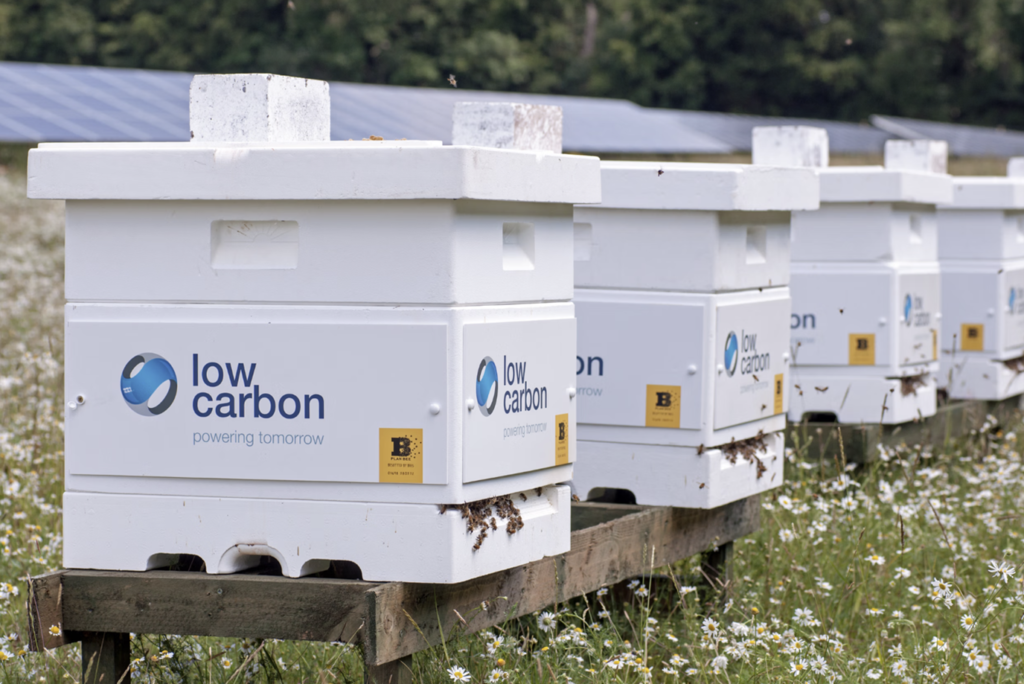
Paratus partnered with Low Carbon, a leading renewable energy Independent Power Producer, to tackle a key barrier to renewable investment: price volatility. Together, they launched the first UK renewable price insurance solution, delivering 100% revenue certainty for 10 assets while preserving upside from favourable power markets.
Low Carbon sought a way to protect merchant revenues without sacrificing flexibility or optimisation benefits. Paratus designed an affordable, portfolio-wide policy covering UK renewable assets under a single structure, ensuring predictable returns and enabling operational freedom. The approach integrates seamlessly with existing market tools such as Corporate PPAs and CfDs, enhancing, not replacing, established financing frameworks.
Rigorous modelling and stakeholder engagement ensured bankability, investor alignment, and regulatory clarity. The result is a scalable, institutional-grade solution that stabilises cashflows, improves IRRs, and frees capital for further clean-energy investment.
This partnership demonstrates a new model for renewable finance: developers no longer need to choose between certainty and upside. By adapting sophisticated insurance tools to the energy transition, Low Carbon and Paratus have set a powerful blueprint for accelerating renewable deployment and strengthening market resilience on the path to net zero.

“Paratus has a deep understanding of the renewable energy industry and the energy market expertise required to navigate industry-wide challenges on price risk and revenue protection. The Paratus insurance product provides Low Carbon with an innovative price risk management mechanism that will help to secure long term revenue certainty in combination with PPAs and CfDs to capture power price volatility that is critical for an IPP.
Marco Verspuij, Head of Power Management at Low Carbon
At Low Carbon we are committed to making a positive and significant contribution in the fight against climate change by building, owning, and operating renewable energy projects at scale. As an enabler for decarbonisation, Paratus is well aligned with our mission to power the world with renewable energy.”
Can insurance impact the global energy transition?
Navigating the complex tightrope that government and industry alike must walk

Insurance at the Heart of the Energy Transition
As COP29 closed with a call to triple global climate finance – described by the UN’s Simon Stiell as an “insurance policy for humanity” – the insurance industry finds itself centre-stage in the transition to clean energy. For Gus Majed, founder and CEO of Paratus, the world’s first (re)insurer underwriting renewable price risk, insurance’s role is clear: enable decarbonisation with stability and pragmatism.
Majed notes that post-pandemic enthusiasm for rapid decarbonisation pulled capital away from conventional energy too quickly, contributing to under-investment and price shocks when geopolitical tensions escalated. Today, a more balanced, realistic approach is emerging: “Decarbonisation is essential, but the transition takes decades. The challenge is achieving it with as little volatility as possible.”
Europe’s mandate-driven model and the US’s market-led approach highlight a core truth – economics matter. If the financial framework fails, he warns, markets fracture and progress stalls. That makes education, policy innovation and industry-government collaboration essential.
Insurance, Majed argues, is a critical lever. By managing revenue volatility and protecting balance sheets, innovative risk-transfer solutions can accelerate renewable deployment. But policy needs to keep pace – including incentives for climate-positive insurance products.
“We don’t need to choose between certainty and progress.
Gus Majed, Group CEO and Founder, Paratus
With pragmatic policy and financial innovation, we can deliver a stable, scalable transition to net zero.”
Paratus Market Insight – October 2025
Every oil cycle creates a familiar puzzle: the “missing barrels” – a gap between IEA-reported supply/demand balances and real-world inventory data. The IEA’s latest outlook again suggests a large implied surplus, yet physical indicators tell a very different story. Rather than phantom oversupply, history shows these barrels are real, just stored off-grid in strategic and commercial reserves outside OECD reporting.
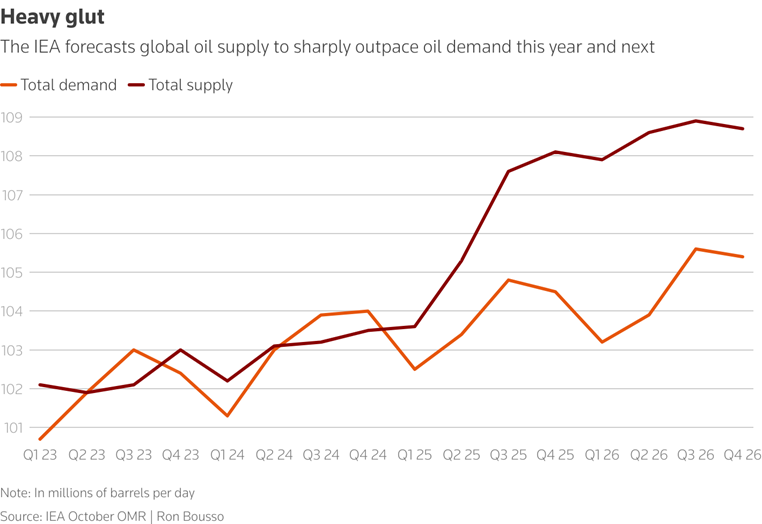
This pattern appeared in 1998, 2008, 2016 and most dramatically during COVID-19, when hundreds of millions of barrels flowed into non-OECD storage, particularly in China, before later demand revisions erased the supposed glut. Today, the IEA projects a 2025 surplus of ~2.35 million b/d, with ~1.47 million b/d of “unaccounted for” oil -volumes largely tied to strategic builds in China, India and oil-in-transit.
Yet market signals contradict oversupply: refining margins remain firm, crude differentials and product cracks are strengthening, and freight rates are elevated ahead of winter.
The conclusion echoes past cycles: statistical surpluses often reflect under-counted demand, not excess supply. As emerging economies expand storage capacity, more barrels move off-grid. Until data captures these flows, apparent gluts should be viewed with caution – the oil isn’t missing, it’s simply where the reporting systems can’t see it.
Follow Us

Paratus @ MEUC Contact Form
If you would like to learn more about our expertise or would like to schedule an introductory meeting? Please complete the form below and we will be in touch: